
- Experts in Translational Medicine and Integrative Cancer Care -
Ozone is a chemical compound consisting of three oxygen atoms O3 (triatomic oxygen), a highly energetic form of normal (diatomic) atmospheric oxygen (O2). Thus, the molecules of these two forms are different in structure, (i.e.: medical ozone is always a mixture of purest ozone and purest oxygen.)
Medical ozone has highly pronounced bactericidal, fungicidal and virostatic properties, and is thus widely used in disinfecting infected wounds, as well as in the treatment of bacterially and virally produced diseases.
Its ability to stimulate the circulation is used in the treatment of circulatory disorders and makes it valuable in revitalizing organic functions. Recently, researchers have discovered that the body produces ozone in order to combat pathogens.
 When administered at low concentrations, the organism’s own resistance is mobilized, meaning that ozone (re)activates the immune system. As a response to this activation because of ozone, the body's immune cells produce special messengers called cytokines (including important mediators such as interferons or interleukins). These inform other immune cells, setting off a cascade of positive changes throughout the immune system, which is stimulated to resist diseases. This means that the application of medical ozone is extremely useful for immune activation in patients with a low immune status and/or immune deficit.
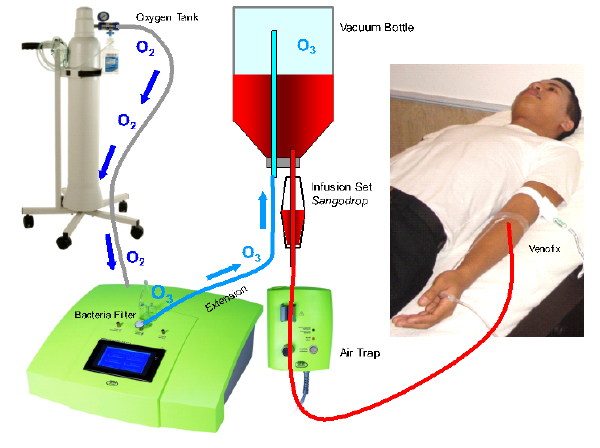
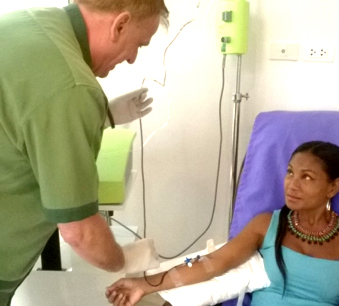
Small quantities of ozone applied in what is called “major autohaemotherapy” (the external treatment of the patient's blood before re-infusion) consequently activate the body's own antioxidants and radical scavengers. It is thus possible to understand why ozone is used in diseases that involve chronic inflammation.
Kinds/Forms of application
Many decades of experience and a number of recent clinical studies have shown that the following five application methods are valid for ozone:
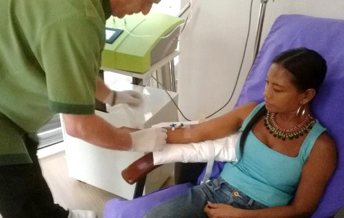 External treatment is primarily achieved through a closed system using O3 gas fed into special plastic “boots” (for the legs and feet) or bags, foils etc., fitting various parts of the body. These are, of course, made of ozone-resistant materials. The parts of the body treated have previously been moistened with water, as ozone cannot act on dry areas. This method is highly effective in treating ulcers, sores, open wounds, postoperative lesions, shingles (herpes) and infected areas etc. Other forms are ozonized pure water (e.g. in dental treatments) and ozonized pure medical olive oil (for skin eruptions such as eczemas and conditions involving moulds, funguses and lichens etc).
Thanks to its selective properties, medical ozone is used in three principal fields of indication: